From late November to January 7, the Coptic Orthodox Church gets ready for the birth of Christ. Here is what happens, in words you can use with your children, and a few simple ways to keep the season at home.
What is Kiahk?
Kiahk is the fourth month of the Coptic calendar. It has thirty days, and most years it runs from December 10 to January 8. It is called the month of Saint Mary, because its praises are full of hymns to her. The Feast of the Nativity falls inside Kiahk, near its end.
For your child: “Kiahk is the Church's month for singing to Saint Mary. Christmas comes at the end of it.”
The Nativity Fast
The fast before Christmas lasts 43 days, from November 25 to January 6. Forty of the days recall Moses' forty days on the mountain before he received God's word (Exodus 34:28). The Church remembers that the last three were added in the tenth century, for the moving of the Mokattam mountain in the days of Pope Abraham and Saint Simon the Tanner.
We give up food from animals: meat, chicken, eggs, milk, butter and cheese. Fish is allowed, except on Wednesdays, Fridays and the Paramoun, and many people give it up too. How much a child fasts is a question for your family and your father of confession.
For your child: “For a while before Christmas we eat only food from plants, and sometimes fish, so our hearts are ready for Jesus.”
The Kiahk midnight praise
The midnight praise, the Tasbeha, is sung all year, on Saturday nights in most parishes. In Kiahk it grows longer, with more hymns. Churches stay up late on Saturday nights, sometimes all night, singing the “Seven and Four”: the four Hoses and the Theotokias, the praises of Saint Mary for each day of the week. Many parishes now sing the Sunday Theotokia with the four Hoses; some still sing all seven. Each day of Kiahk also has its own Psali.
The four Hoses are songs of praise from the Bible, sung at every Tasbeha:
- Moses' song after crossing the Red Sea (Exodus 15)
- Psalm 136 (135 in the Church's numbering), with its refrain “for His mercy endures forever”
- The song of the three young men in the fiery furnace (Daniel 3, from the Church's Greek Old Testament)
- Psalms 148 to 150, “Praise the Lord from the heavens”
Bring the children, even if they fall asleep. Boys who serve as deacons play the cymbals and the triangle, and everyone joins in the responses.

Christmas Eve and January 7
This year the Paramoun, the strict day before the feast, is one day: January 6, with no fish. Its Liturgy is prayed during the day. That night comes the feast itself: Vespers, the midnight praise in the festive tune, Matins and the Feast Liturgy, which often runs to about midnight. Times vary from parish to parish.
After the Liturgy and Communion, the fast is over. Families go home and break the fast together, often with fatta, eggs, cheese and meat. On Christmas Day many visit relatives, and children get new clothes and a little money, the 'eidiyya.
The greeting is “Eid milad magid”: a glorious Feast of the Nativity. You'll also hear “Kull sana wenta tayyib” (to a woman, “wenti tayyiba”), the greeting for every feast.
Why is Coptic Christmas on January 7?
The Coptic calendar keeps its own months, and like the old Julian calendar it adds a leap day every four years. In most years the Nativity is on 29 Kiahk, which matches December 25 on the Julian calendar. On the calendar most of the world uses today, that day is January 7.
The Christmas story, told right
A few details worth getting right when you tell the story to your children:
- The angel Gabriel came to Mary in Nazareth (Luke 1:26). He is the only angel in the story with a name.
- There is no innkeeper in the Gospel, only that “there was no room for them in the inn” (Luke 2:7).
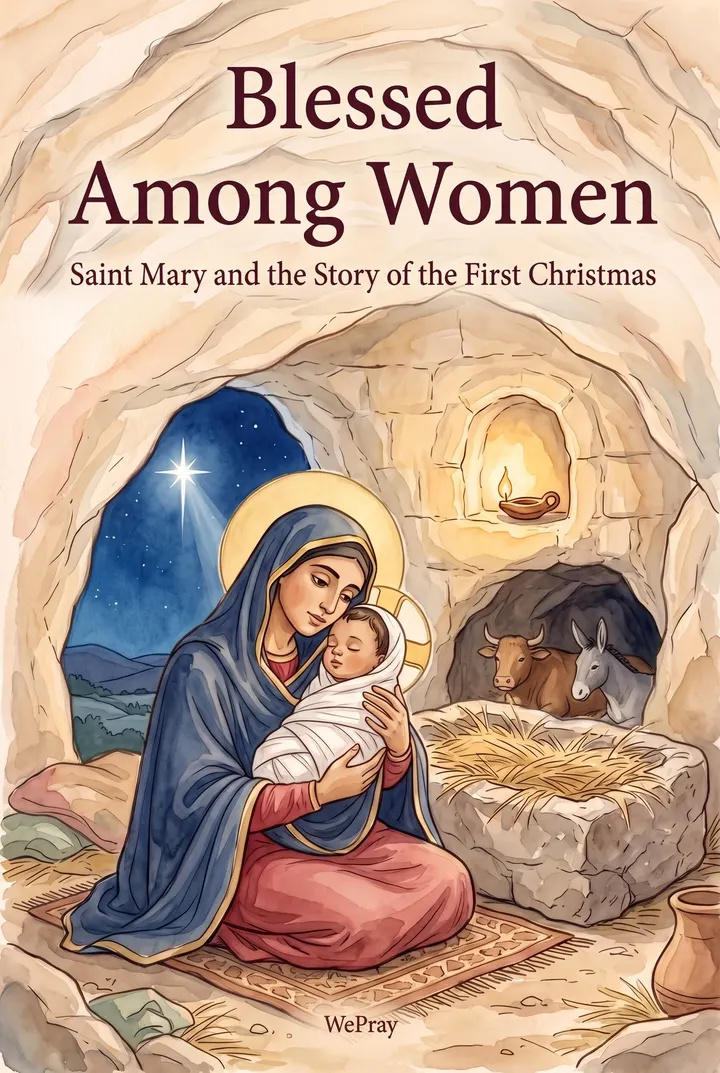
- The Church sings that Christ was born in a cave, and Luke tells us He was laid in a manger.
- The angels were “praising God and saying, ‘Glory to God in the highest’” (Luke 2:13–14).
- The Gospel calls them wise men, never kings, and says nothing about crowns. They came “into the house” and saw “the young Child with Mary His mother” (Matthew 2:11). The Gospel doesn't say how many there were; “three” comes from tradition.
- The ox and the donkey come from the icons and Isaiah 1:3, not from the Gospel story.
- Saint Joseph was “a just man” (Matthew 1:19) who cared for Mary and the Child. We don't call him Jesus' father.

Simple ways to keep Kiahk with children
- Go to a Saturday night praise. Even an hour counts, and it's fine if they fall asleep on the bench.
- Learn one line together, like “for His mercy endures forever” from Psalm 136, and listen for it in church.
- Read the Kiahk Sunday Gospels at home, one a week: Luke 1:1–25, 1:26–38, 1:39–56 and 1:57–80. Then read Luke 2 and Matthew 2 at Christmas.
- Pray the angels' words in the morning, “Glory to God in the highest”, and Simeon's song at bedtime. The Church prays both in the Agpeya.
- Make the fast their own. Ask Abouna what suits your child's age, and let them choose one small thing to give up.
- Light a candle by a Nativity icon in your icon corner, and pray there together.
- Read the Christmas story a little each night, and finish on Christmas Eve.
- Go to the Christmas Eve Liturgy together, then break the fast as a family.
- Teach them the greeting “Eid milad magid” to say to everyone on Christmas Day.